

Posted by Editorial Team
on September 15, 2026

Table of Contents
- Types of outdoor fire pits: which one to choose for your patio
- Propane outdoor fire pit: benefits and operation
- Materials and durability: Corten steel, stone, and stainless steel
- Outdoor fire pit regulations: what your municipality says
- Outdoor fire pit safety: distances, spark screens, and best practices
- Outdoor fire pit maintenance: seasonal guide to extend its lifespan
- Accessories and layout: creating a cozy atmosphere on the terrace
- Frequently Asked Questions
Last updated: September 15, 2026
Types of outdoor fire pits: which one to choose for your patio
Choosing an outdoor fire pit starts with two decisions: the fuel type and the installation method. Everything else (materials, dimensions, accessories) follows from these two choices.
Here is how to structure your thinking.
Wood, propane, or natural gas fire pit
Firewood is inexpensive and provides an authentic flame, but it requires constant fueling, produces smoke, and demands proper venting. Propane lights in seconds, burns cleanly, and can move with you. Natural gas offers the same convenience without the need to refill tanks, provided you have a fixed connection installed by a professional.
For frequent, hassle-free use, propane wins. For a fixed terrace with a permanent line, natural gas is more practical in the long run. For pure ambiance and the joy of a fire, wood remains unbeatable.
Portable, built-in, or modular fire pit
A portable fire pit can be moved according to the seasons and is suitable for renters. A built-in fire pit integrates into a wall or patio structure and saves floor space. A modular or prefabricated fire pit combines a fire bowl, table, and storage into a cohesive unit, often delivered in pieces to be assembled.
The modular option is the most versatile choice for a complete landscape design. It coordinates with existing patio furniture and is easier to store during the off-season.
Propane outdoor fire pit: benefits and operation
A propane outdoor fire pit operates with a tank connected to a burner, often filled with lava rock or decorative glass that diffuses heat through thermal radiation. Ignition is instantaneous, flame control is precise, and there are no ashes to clean up.
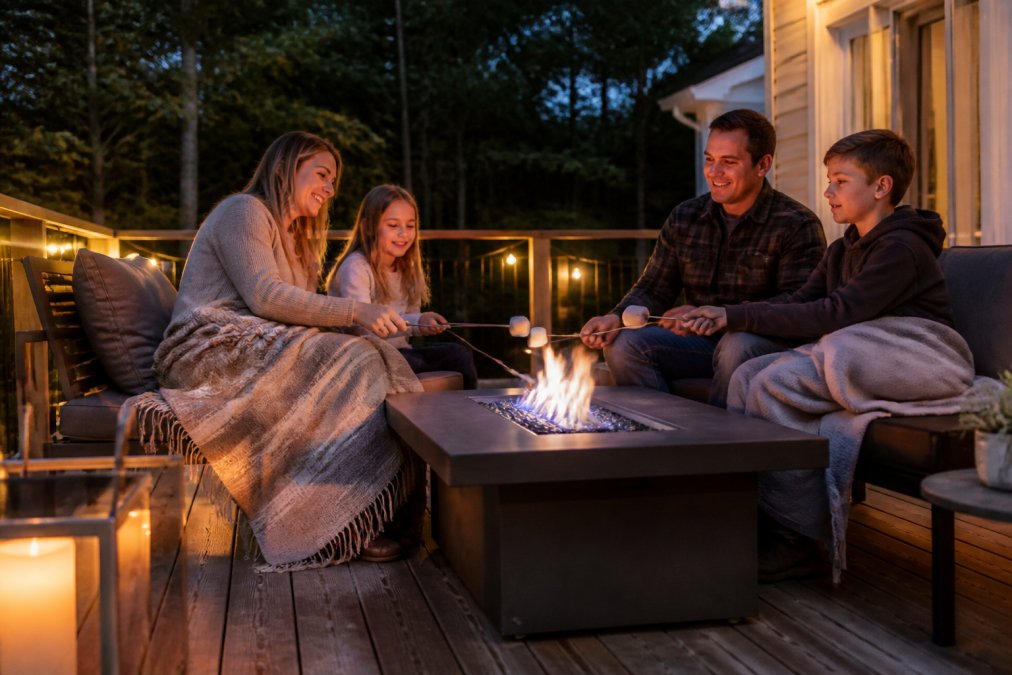
The most common benefits include:
- Immediate startup, even in damp weather
- No smoke smell on clothes
- Adjustable heat for the evening
- No connection permit required for portable models
The trade-off: you must monitor propane levels and keep a spare tank on hand. A poorly maintained propane fire pit burns less efficiently, which is quickly noticeable in fuel consumption.
Pro TipAlways keep a second full tank in reserve during the season. Running out of propane invariably happens in the middle of an evening, never before.
Materials and durability: Corten steel, stone, and stainless steel
The choice of materials determines whether your fire pit will survive ten winters or two. In Canada, the freeze-thaw cycle is the most aggressive degradation factor: water seeps into micro-cracks, freezes, expands, and gradually cracks the surface. Materials react differently to this stress.
Corten steel develops a surface rust patina that seals the metal and blocks deep corrosion. This protective layer reforms if scratched, making it a resilient choice for regions with high humidity and long winters. It requires no annual treatment, though it may stain light-colored surfaces beneath it during the first few rains.
Stainless steel (grades 304 or 316) resists corrosion without a visible patina. Grade 316, with its molybdenum, handles salt spray and coastal environments better. It costs more upfront, but maintenance is limited to periodic cleaning with soapy water. Beware of fasteners: ordinary steel bolts on a stainless structure create galvanic corrosion at the contact point.
Natural stone and granite offer high thermal mass: they store heat and release it slowly after the fire is out. Their weakness is porosity. Unsealed granite absorbs water, which freezes and cracks the surface. Annual sealing in the fall is essential. Avoid limestone and soft sandstone, which flake quickly in freezing conditions.
Material |
Freeze-thaw mechanism |
Annual maintenance |
Ideal for |
|---|---|---|---|
Corten steel |
Self-protecting patina, no flaking |
None |
Contemporary design, all regions |
Stainless steel 316 |
Inert, no absorption |
Cleaning 2-3 times |
Seaside, high humidity |
Sealed stone and granite |
Thermal mass, porous if unsealed |
Autumn sealing |
Built-in fire pits, low walls |
Painted metal |
Water seeps into chips, rusts under paint |
Spring touch-ups |
Sheltered portable pits |
Ordinary painted metal chips within two or three Canadian winters. Corten and 316 stainless survive this test without intervention. For a fire pit exposed to the elements without shelter, prioritize these two options, even at a higher initial cost.
Pro TipAfter each winter, inspect welds and fasteners. A one-millimeter crack in April becomes a major water entry point by the following November.
Outdoor fire pit regulations: what your municipality says
Outdoor fire pit regulations vary from one municipality to another, and it is the check that almost no one does before buying. Three elements frequently come up: the minimum distance between the fire pit and any structure, the maximum flame height, and whether wood is allowed as fuel in urban areas.
Before purchasing, check with your urban planning department regarding:
- The minimum distance required from fences and buildings
- Authorized fuels (wood, propane, gas)
- Restriction periods during droughts
- Any potential requirement for a spark screen
A propane or natural gas fire pit generally passes municipal rules more easily than a wood-burning one, as it produces neither smoke nor particles. Also consult the fire safety tips from the Government of Canada for general principles.
WarningInstalling a wood-burning fire pit in a zone where it is prohibited can lead to a fine and the obligation to dismantle it. Check before you buy, not after.
Outdoor fire pit safety: distances, spark screens, and best practices
Outdoor fire pit safety relies on three simple rules: clear the area, monitor the flame, extinguish completely. A radius of one to two meters around the fire pit must remain free of any flammable objects, including patio cushions and blankets.
A spark screen is essential for any wood-burning fire pit. It retains embers projected by the wind, the main cause of terrace fires. For propane models, check the connections each time you change the tank: a leak detected by smell should be corrected immediately.
Never leave a lit fire pit unattended, even for a few minutes. And keep a fire extinguisher accessible on the terrace, not in the basement.
Outdoor fire pit maintenance: seasonal guide to extend its lifespan
A neglected outdoor fire pit loses its effectiveness in two seasons. A well-maintained one lasts ten years or more. Here is a maintenance calendar adapted to the four Canadian seasons, with the specific actions that make the difference.
Spring (April-May), startup
First, inspect the structure: cracks in the stone, paint chips, rust on fasteners. Clean propane burners with a soft brush and ensure ports are not clogged by insects or debris. Replace lava rock if it is blackened or deeply damp. Check gas connections with soapy water: bubbles indicate a leak. For a wood fire pit, remove accumulated ashes and inspect the spark screen.
Summer (June-August), routine maintenance
After each wood fire, let the ashes cool completely (24 hours) before removing them. Never throw hot ashes into a combustible container. For a propane fire pit, check the tank level before each evening and keep a reserve. Clean decorative glass or stones with clear water if they become sticky. Inspect flexible hoses once a month for cracks or wear.
Autumn (September-October), winter preparation
This is the most important and most neglected step. Empty all ashes and clean the inside of the bowl. Apply a water-repellent sealer to stone and granite. Check welds and apply rust-proof paint to any chips on painted metal.
Winter (November-March), storage and protection
Warning signs to watch for
Key PointWinter storage is the step most owners skip. It is also the one that most extends the lifespan of an outdoor fire pit. A breathable cover and bringing tanks inside do more for longevity than any accessory.
Accessories and layout: creating a cozy atmosphere on the terrace
Ambiance is built around the fire pit, not just with it.
Frequently Asked Questions
What is the best outdoor fire pit for a small terrace?
For a small terrace, a portable propane fire pit or a compact fire bowl is more suitable than a built-in model. These fire pits occupy little space, move easily, and require no permanent installation. Check dimensions before purchasing and prioritize a model with a built-in spark screen to meet safety distances. A modular fire pit can also adapt to different configurations depending on the space available.
Wood or propane fire pit: which one to choose?
A wood fire pit offers traditional ambiance and lower fuel costs, but it produces more smoke and requires regular maintenance. A propane outdoor fire pit lights instantly, produces little smoke, and is easily controlled, making it practical for urban terraces. Check your municipality's outdoor fire pit regulations first, as some areas restrict the use of wood.
Is it safe to install an outdoor fire pit on a wooden deck?
Yes, provided you follow certain outdoor fire pit safety rules. Place the fire pit on a non-combustible surface such as a concrete or stone pad, keep a minimum distance of 3 meters from wooden structures and branches, and never leave the fire unattended. Always use a spark screen and keep a fire extinguisher close at hand. Also, check local requirements before installation.
How do you maintain an outdoor fire pit to extend its lifespan?
Regular outdoor fire pit maintenance extends its lifespan by several years. Clean out the ashes after each use, cover the fire pit when not in use, and store it in a sheltered area during the winter. For steel models, inspect for rust spots and apply high-temperature paint as needed. Also, check propane connections before each season to prevent leaks.
