

Posted by L’équipe Ameublement à rabais
on October 02, 2026

Table of Contents
- Why affordable sustainable furniture is becoming essential in 2026
- How to choose sustainable furniture without breaking the bank
- The importance of sustainable materials for your furniture
- For solid and composite wood:
- Budget-friendly furnishing tips to optimize your space
- Indoor furniture maintenance: extending the life of your pieces
- Advantages of modular furniture for small spaces
- Eco-friendly furniture and the circular economy
- Conclusion: investing intelligently in affordable sustainable furniture
- Frequently Asked Questions
Last updated: October 2, 2026
Why affordable sustainable furniture is becoming essential in 2026
According to Grand View Research, the global eco-friendly furniture market is expected to reach 58.3 billion USD in 2026, before climbing to 113.9 billion USD by 2033. This rapid growth reflects a reality: consumers are now seeking affordable sustainable furniture that does not compromise their budget or their environmental values.
Quebec and Canadian families no longer want to choose between quality and affordability. They are looking for furniture that lasts, looks stylish, and doesn't break the bank.
This article will teach you how to spot real quality, extend the life of your furniture, and create a functional space without spending a fortune.
How to choose sustainable furniture without breaking the bank
Choosing affordable sustainable furniture requires a strategy. It is not just a matter of the sticker price; it is about understanding what actually makes a piece of furniture last.
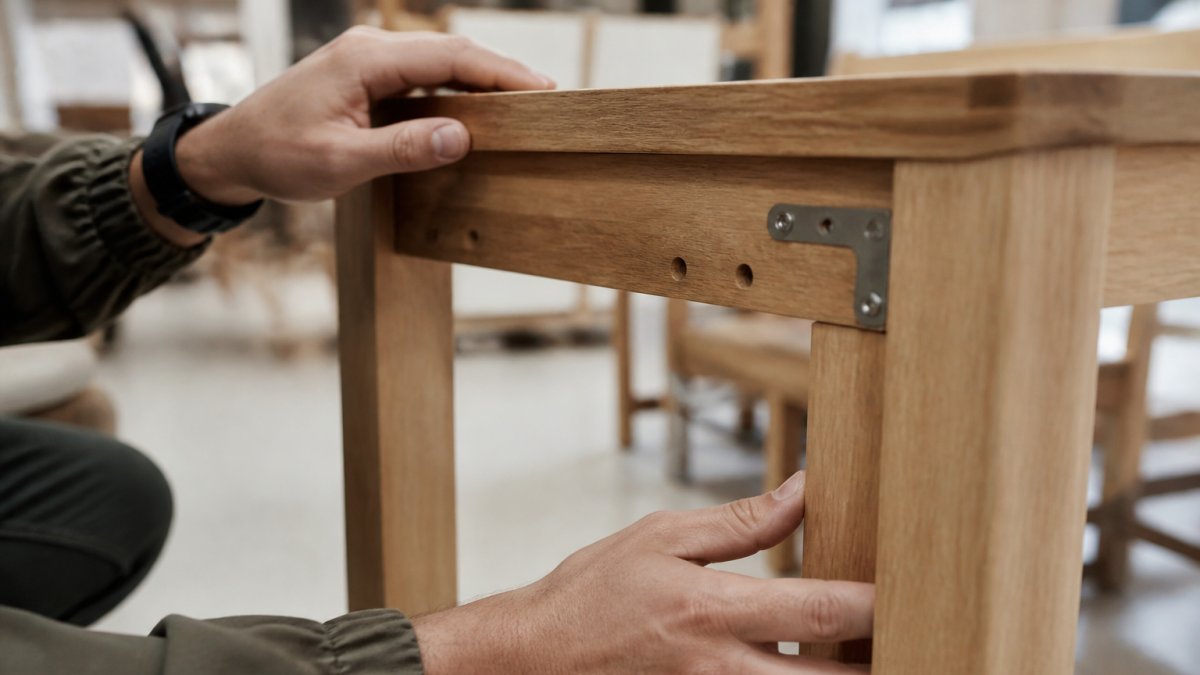
Checking manufacturing quality in-store
Examine three key elements: joints (tight and even indicate careful assembly), stability (lift the furniture slightly; it should not wobble or make noise), and fasteners (screws tightened well, bolts in place, dowels secure). For modular furniture, test folding or extension mechanisms.
Recognizing robust materials
Solid wood offers the best durability, but composite wood (particleboard or MDF) can also last if it is well finished and assembled.
According to California State University, furniture evaluation should be based on a cross-analysis of four pillars: quality, functionality, price, and durability. Certified materials (such as FSC-certified wood) offer extra assurance, though they are not always necessary for affordable sustainable furniture.
Stainless steel and painted metal hold up well over time. Beware of coatings that peel or fabrics that pill quickly.
The importance of sustainable materials for your furniture
Materials are not just a matter of aesthetics. They determine how long your furniture will survive the rigors of daily life and what the actual cost per year of use will be.
According to the MDPI Sustainability Journal, the design of sustainable furniture must integrate reparability from the creation phase to withstand wear and extend useful life.
Evaluating materials in-store: a practical checklist
Before buying, inspect these key elements for each type of material:
For solid and composite wood:
- Finish: smooth and uniform, with no visible cracks.
- Joints: tight and even, with gaps of less than 2 mm.
- Weight: a piece of furniture that is heavy (for its size) indicates a sturdier construction.
For metals (steel, aluminum):
- Finish: stainless steel resists corrosion better. Verify that paint does not peel at edges or weld points.
- Welds: smooth and continuous, without cracks or bumps.
- Rust: none, not even tiny spots.
For fabrics and upholstery:
- Density: dense fabric resists wear better.
- Stitching: tight and even, with no loose threads.
- Pilling: rub the fabric; small fiber balls indicate rapid wear.
- Synthetic coatings: should not flake at creases or contact points.
Certified vs. standard materials
What really matters: manufacturing quality and the availability of replacement parts.
The trap of cheap materials
Some materials degrade quickly: thin panels that swell with moisture, cheap vinyl coverings that crack, untreated steel that rusts, and low-density synthetic fabrics that pill. A quality extendable table with thick steel rails and a well-finished particleboard top can last a long time.
Budget-friendly furnishing tips to optimize your space
Living in a small space or on a tight budget requires creativity. The right pieces can transform your home without breaking the bank.
Modular and multifunctional furniture
Modular furniture is your secret weapon. An S-shaped bookshelf can serve as a room divider while providing storage. A folding dining table can become an accent table. Recliners, desks with built-in storage, and TV stands with drawers maximize every centimeter.

Where to find quality furniture at a low price
Compare prices, but also materials and warranties. A cheaper piece of furniture is only a good deal if it lasts long enough to justify the purchase.
5-tier geometric bookshelf with divider, natural wood and white →
Indoor furniture maintenance: extending the life of your pieces
Affordable sustainable furniture can last for years or deteriorate in a few months, depending on the maintenance it receives.
Regular cleaning and prevention
A damp cloth once a week is sufficient for most wood or composite panel furniture. For fabrics, vacuum regularly and clean fresh stains quickly. Avoid direct sunlight and maintain stable relative humidity.
Simple repairs and DIY restoration
Tighten bolts and screws. Apply dry lubricant to rails that slide poorly. Wood filler can repair minor cracks.
Attention
Do not attempt major repairs if you are not comfortable. Structurally compromised furniture can become dangerous. Consult a professional if you have any doubts about safety.
Advantages of modular furniture for small spaces
Modular furniture offers flexibility that fixed pieces cannot match. A bookshelf with a geometric S-shape creates storage and style without monopolizing space. Folding tables with built-in storage and casters combine function with space-saving.
Eco-friendly furniture and the circular economy
The circular economy reduces waste and extends product life. For a consumer on a tight budget, the real question is: how can you tell if cheap furniture is actually sustainable?
Calculating the real cost per year of use
Cheap furniture can cost more in the long run than a more expensive piece.
Concrete example:
- Piece A: $150, lasts 2 years before warping or breaking
- Piece B: $250, lasts 8 years with regular maintenance
Cost per year:
- Piece A: $150 ÷ 2 years = $75 per year
- Piece B: $250 ÷ 8 years = $31.25 per year
Key Point
Before clicking "Add to Cart," divide the price by the estimated lifespan (based on customer reviews, warranties, and build quality). The cheapest furniture is not always the best investment.
Real durability vs. greenwashing
Recycled and certified materials are becoming the standard, but an FSC certification does not guarantee that a piece of furniture will last a long time. Poorly assembled FSC-certified wood furniture will end up in the landfill just as quickly as non-certified wood furniture.
True durability rests on three pillars:
- Solid construction: tight joints, robust assemblies, thick materials. Check this in-store before buying.
- Reparability: replacement parts available, modular design, parts that can be replaced without throwing away the whole piece.
- Feasible maintenance: furniture that requires complex or expensive maintenance will often be abandoned. Prioritize pieces that are easy to clean and repair.
The circular economy in practice
Demand for sustainable furniture is growing at an annual rate of 6.88%, according to First Chair, which means the supply of quality, affordable pieces is also increasing.
Comparison table: environmental and financial cost
| Scenario | Initial cost | Estimated lifespan | Cost per year | Environmental impact |
|---|---|---|---|---|
| Cheap new furniture, poorly built | Low | 2-3 years | High | High (rapid disposal) |
| Quality new furniture | Medium-high | 8-12 years | Low | Low (longevity) |
| Restored second-hand furniture | Very low | 5-8 years (after restoration) | Very low | Very low (circular economy) |
| FSC-certified new furniture, poorly built | Medium | 3-4 years | High | Medium (certified, but rapid disposal) |
Conclusion: investing intelligently in affordable sustainable furniture
Finding durable furniture on a budget isn't a compromise; it's a smart strategy. By checking quality in-store, choosing the right materials, maintaining your pieces, and prioritizing modularity, you can create a functional and lasting interior without going into debt.
Frequently Asked Questions
How can you identify quality furniture on a budget?
Examine the joints and assembly: screws should be tight and parts well-fitted. Check wood or engineered materials for cracks or poorly finished areas. Test stability by gently pushing on the furniture. Materials like solid wood or sturdy particleboard offer better durability. Consult online customer reviews to understand how the furniture actually ages after a few months of use.
Which materials should you prioritize for durable, affordable furniture?
Solid wood offers the best longevity but is more expensive. Quality particleboard, with sufficient thickness and robust finishes, is a good compromise. Steel or metal frames enhance stability. Avoid overly thin coatings that scratch easily.
How do you maintain furniture to extend its lifespan?
Clean regularly with a damp cloth suitable for the material. Avoid excessive humidity, which causes engineered wood to swell. Tighten screws and joints seasonally. Apply oil or wax to solid wood according to the manufacturer's recommendations. Repair small scratches or chips quickly to prevent them from getting worse. Protect your furniture from direct sunlight, which fades finishes.
Is it possible to find durable furniture online in Canada?
Yes, several options exist. Canadian online stores like Ameublement à rabais offer furniture selected from reliable suppliers with excellent value for money. Benefits include fast shipping within Canada, a wide selection, and competitive prices. Check detailed photos, precise dimensions, and customer reviews before buying. Verify the return policy in case the furniture doesn't meet your expectations upon receipt.
